
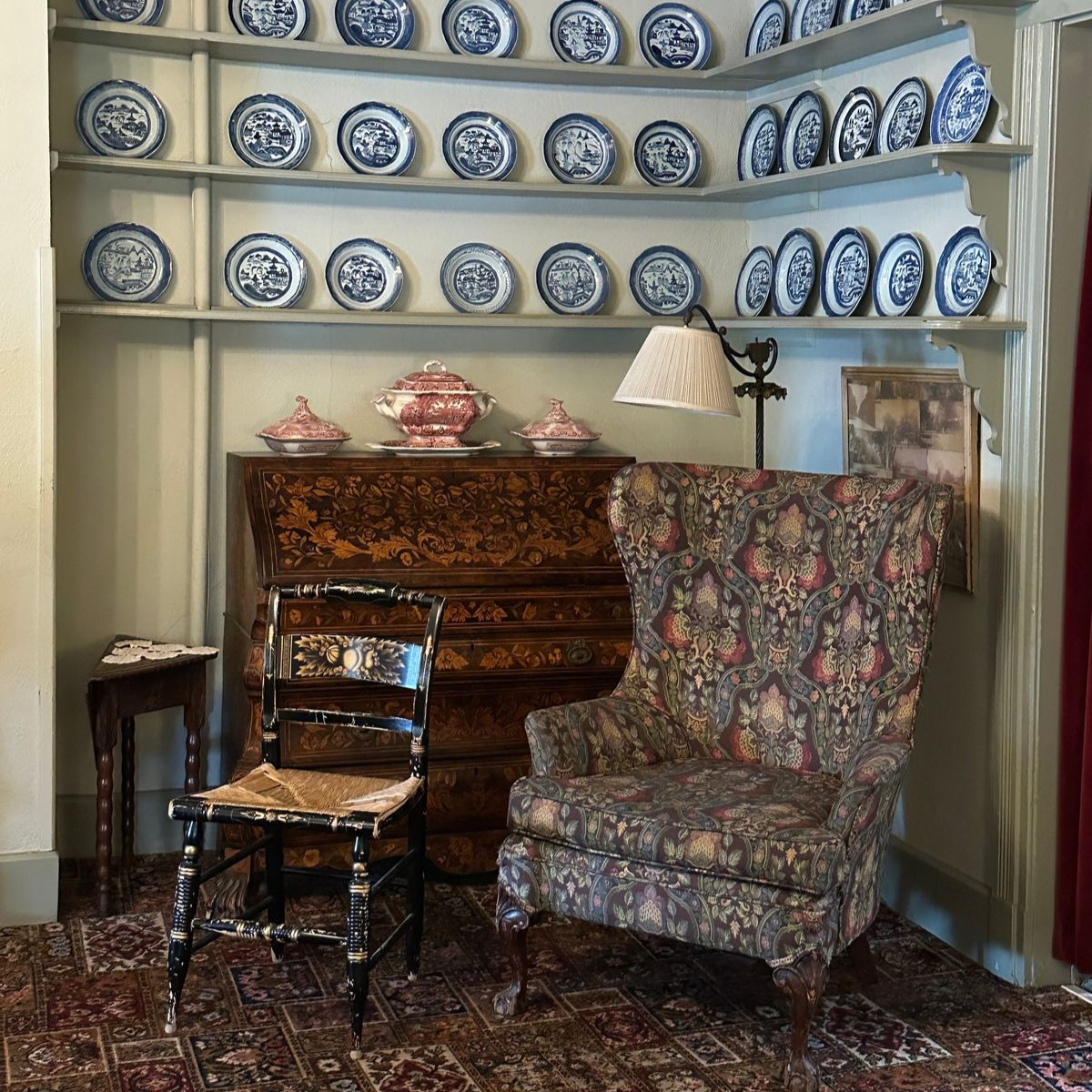

The Difference Between a Furnished Home and a Collected One
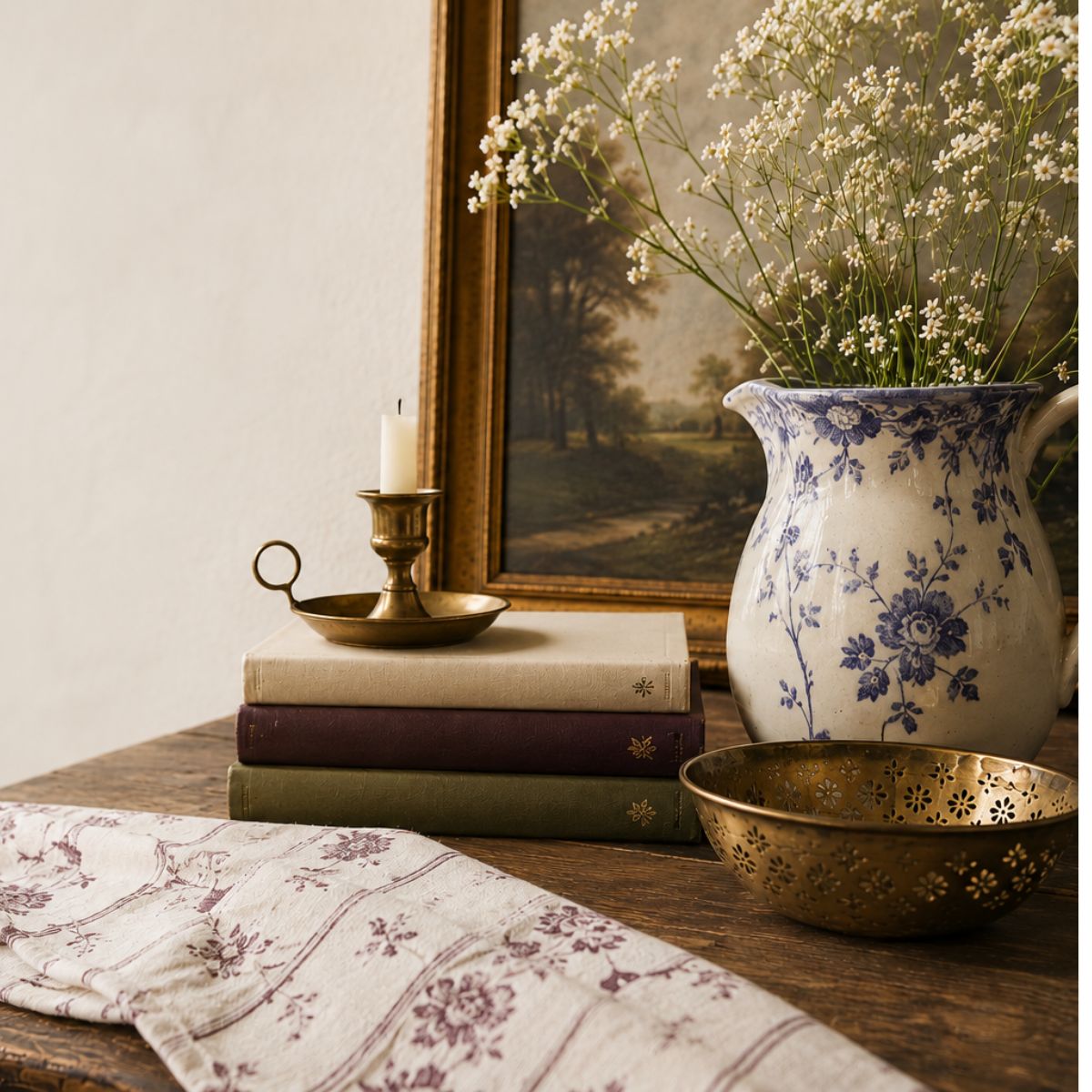
There's a particular kind of quiet that settles over a house at the end of a long renovation, when the last box is unpacked and the last picture is hung and you stand in the doorway of a room that finally looks the way you imagined it. I have felt that quiet exactly twice in this 1890s house, and both times, it lasted about a week.
Not because something went wrong. Because something went right — I noticed a chipped ironstone pitcher at an estate sale, or a friend mentioned she was clearing out her grandmother's sewing table, and the room that had felt finished suddenly felt like it had room to breathe again. A collected home doesn't resolve. It accumulates. And for a long time, I thought that meant I was doing it wrong.
Furnished Is Not the Same as Collected
I came to this house from a Manhattan apartment where everything was chosen quickly, out of necessity, from stores with delivery windows and return policies. That apartment looked done within a month, because it was furnished, not collected. There's no shame in that — sometimes a season of life calls for fast and functional, and mine did. But it also meant I'd never experienced the particular discomfort of living inside a room that wasn't finished yet, on purpose, for years.
The Room I Tried to Finish the Old Way
The first room I tried to “finish” was the front parlor. I had a vision — I could practically see the finished photograph in my head, the way you do when you've spent too long scrolling at midnight — and I went looking for the pieces that would complete it. A drop-leaf table. A set of chairs. Brass candlesticks. I found most of them within a few months, arranged them exactly as planned, and felt, for the aforementioned week, triumphant.
Then I started noticing what was wrong. Not wrong, exactly — new. The table was right, but it was too matched to the chairs, like they'd grown up together and never met anyone else. The room had a vision, but it didn't have a story yet. It looked like a stage set for someone's life rather than the actual residue of one.
A Collection Doesn't Have an Endpoint
That's when I started to understand the difference between decorating a room and living inside a collection, and it's a distinction I don't think I could have explained before I owned a house old enough to have its own opinions. Decorating has an endpoint. You hit it, you photograph it, you move on to the next room. Collecting doesn't have an endpoint, because the whole premise is that the things find you over time, not the other way around. A finished collected room is a contradiction in terms — it's like asking when a garden is done growing.
I think this is the part people find hardest to sit with, especially if they're coming to a vintage-leaning, “collected not bought” aesthetic from a world of catalog rooms and three-click furniture. We are trained, almost from childhood, to think of a home as a problem with a solution. Empty room, full room, problem solved. But a collected home runs on a different logic entirely — closer to a friendship or a library than a renovation. You don't finish a friendship. You don't finish a library. You just keep living alongside it, and every so often something gets added that changes the whole shape of what's there.
The Shelf That's Always Mid-Sentence
There's a particular shelf in my dining room that has held, at various points over the past several years: a stack of mismatched ironstone, a brass candlestick with no partner, a chipped majolica planter I almost didn't buy, and currently, a small painted box that belonged to someone I'll never meet, found at a barn sale two towns over for four dollars. None of these things arrived together. None of them were “meant” to be on that shelf when I bought the shelf. And yet the shelf has never once, in years, looked unfinished to me. It has only ever looked like itself, mid-sentence.
Stop Apologizing for the Empty Corner
I used to apologize for this, a little, when people visited. I'd gesture at an empty corner or a wall I hadn't hung anything on yet and say something like “I haven't gotten to that yet,” as though the house were a checklist with line items still pending. I don't do that anymore. The empty corner isn't a failure of completion. It's just the part of the sentence I haven't written. Something will arrive — it always does, eventually, usually when I've stopped actively looking for it — and the corner will become part of the story instead of a gap in it.
What changed for me wasn't the house. It was the timeline I was measuring it against. I had imported a renovation timeline — weeks, months, a year at most — into a process that actually runs on a much longer clock: the clock of estate sales and flea markets and the occasional inheritance and the slow, unhurried business of things finding the people who'll actually use them. You cannot rush a collection without turning it into a purchase. The rushing is the tell. The moment I start buying to fill a space rather than buying because I love a thing and will find it a home, I can feel the difference in the room afterward. It looks staged instead of gathered. It looks like effort instead of time.
A House That's Lived In, Not Done
I don't think this makes a collected home harder to live in. If anything, it's made mine easier, because it released me from a standard I was never going to hit anyway. There is no version of this house, ten years from now, that will be “done.” There will just be a house that has had ten more years of things arrive in it, get rearranged, get passed along to someone else when they no longer fit, and get replaced by something that does. That's not an unfinished project. That's just what it means for a house to be lived in by someone who's paying attention.
So if you're standing in a room right now that doesn't feel complete — if there's a wall that's still bare, a shelf with an obvious gap, a corner that's waiting for something you haven't found yet — I'd gently suggest that you're not behind. You're just early. The room isn't unfinished. It's mid-sentence, same as mine, same as all the best rooms I've ever stood in. Let it stay that way a little longer. Something good is probably already on its way to you, even if it hasn't found you yet.
Frequently Asked Questions
Can a collected home ever be finished?
Not really. The best collected homes continue to evolve as the people living in them change.
What's the difference between a furnished home and a collected home?
A furnished home is assembled to meet immediate needs. A collected home grows slowly through meaningful pieces gathered over time.
How do I start creating a collected home?
Start with pieces you genuinely love, mix old and new, and allow empty spaces to remain until the right object finds you.
Signs You're Creating a Collected Home
• Your favorite pieces were discovered over time.
• Not everything matches—and that's part of the charm.
• You enjoy mixing vintage and new.
• Empty corners don't feel like failures.
• Your home changes with the seasons and with you.
Continue Reading
Explore more stories in the Hazel Journal and discover thoughtfully chosen vintage and vintage-inspired homewares at Hazel Home Co.
Originally published in essay form on Yesteryear Charm, the Hazel Home Co. Substack.
